Episode Transcript
[00:00:00] Speaker A: Foreign.
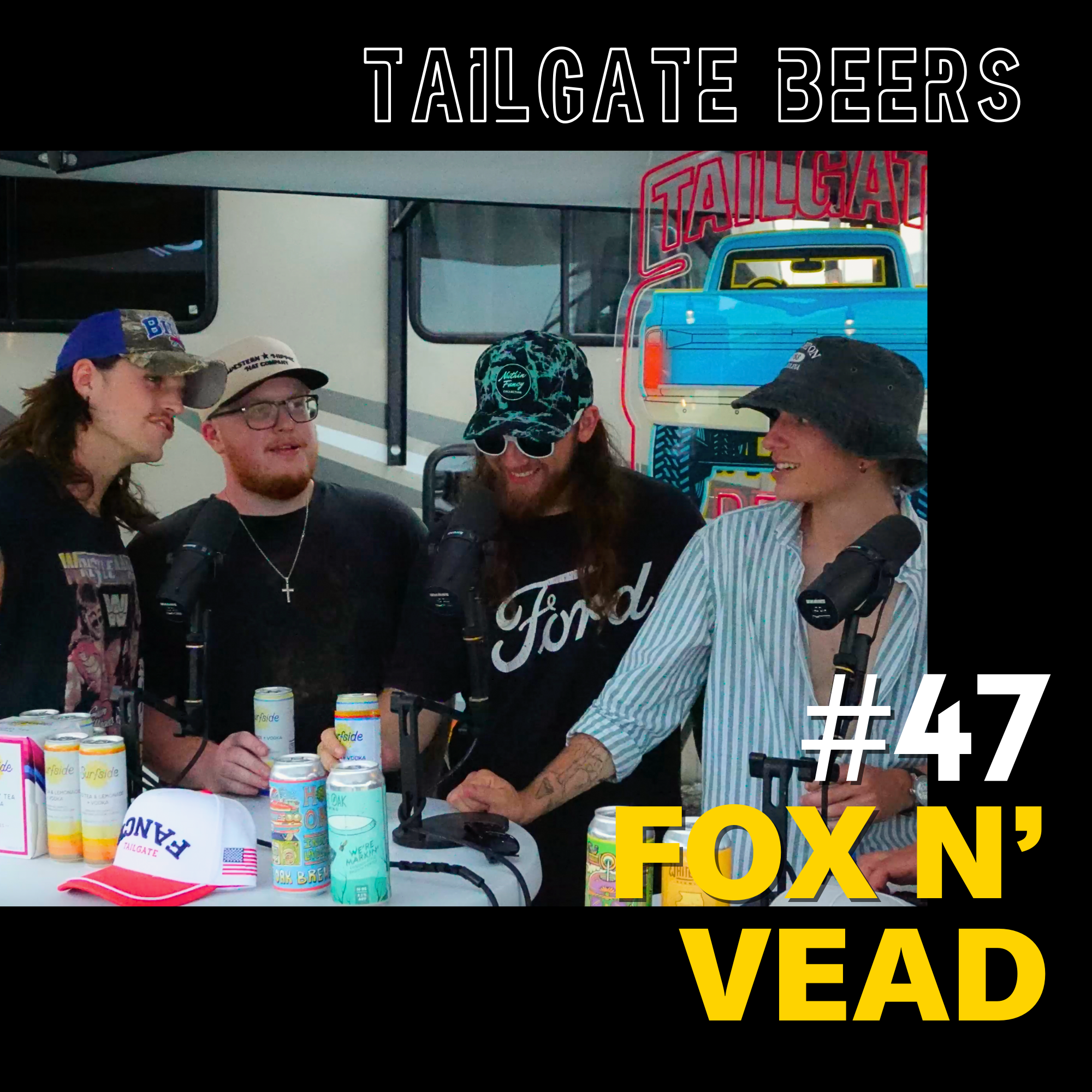
[00:00:20] Speaker B: Hey, welcome to Tailgate Beers. Ryan and Austin here as usual. Hey, we've got a special guest with us tonight playing here at Cruisins in Farm on Farmington Road here in West Peoria, Randall King. Thanks for joining us.
[00:00:32] Speaker A: Good to be here, boys. Good to be here. So.
[00:00:34] Speaker B: So we were talking off camera just before we. We jumped on. And you've been to Springfield, but have you ever been to Peoria area before?
[00:00:42] Speaker A: Man, I really don't think we have.
I think Springfield's the closest we've come out here.
You know, I'm in. Chicago's a couple hours away. We do Joe's up there on Weed Street. Done that. Open for Kojo in Hoffman Estates on. Almost three years ago at this point. There you go. So, yeah, we've been around the area.
[00:01:01] Speaker B: So you're a Texas boy.
[00:01:03] Speaker A: I know.
[00:01:03] Speaker B: I've done the research on that. And tell us about your journey as far as getting into music as growing up in Texas.
[00:01:11] Speaker A: Man, I grew up. I called myself like a panhandle mutt because I grew up. Was born in Amarillo, grew up in Hereford, Texas.
But then I went to high school in Amarillo, graduated from there, left Amarillo, followed my high school sweetheart down to Lubbock to Texas Tech and went to Tech for a year and a half.
Got one good semester, which is my first semester. Filled out the other two.
Decided that that was not for me. Business degree was not it.
Still remember calling my dad, going, hey, man, I know what you spent at this university, but I got a plan.
Don't worry, I got a plan, but I'm not gonna go to Tech anymore. Boy, that was probably one of the hardest phone calls I've ever made to my dad, but decided to go to South Plains College out in Loveland, get a sound tech degree, learn how to produce my own records, learn how to work the studio.
And then I just started going to bars, following ax around, learning, Learning the ropes from the outside perspective and getting myself in the Doors.
[00:02:18] Speaker C: How. Whatever happened to the girl?
[00:02:20] Speaker A: Oh, we broke up.
Second semester of college, man. Okay.
I think it was February.
What would be 2010.
[00:02:33] Speaker C: So you're running around Texas doing all this.
What's kind of the point where you get to call your dad and say, hey, and I think this is working out. I think this is gonna be something.
[00:02:43] Speaker A: I mean, yeah, I mean, my dad. My dad didn't believe in it for a while, you know, he was everything. Everything I did for a long time, like, through college, it was like, yeah, you still got some learning to do. You can tell you still got some learning to do. And about 20, I think it's about 2014, 2015.
I had a band right out of college, and even in college that was. It was like the red dirt Americana thing. We recorded a record in the basement of the Texas Tech library, which is like, they have a really nice studio down there.
Terrible record. We buried it. Can't find it. Don't even try it. Ain't you. Can't find it no more.
But it just wasn't me. And about 2015, I started going back to my roots, was doing the country thing, which is who I am naturally. It's the kind of country music I grew up on. Traditional. And I wrote a song called Another Bullet. And my dad heard it and he goes, okay, I think you might got this thing figured out, son. I think you can do this. And he invested in me and helped me put together my first ep. I thought, I want to save us.
My Grandma gave me $1000 and my daddy gave me 1500 and I was able to finish the EP. Everything else, like, we played in dive bars, like three hour sets in New Mexico, two nights a weekend, just three hours in a row. And we would do this. I'd pay my guys as much as I could and then the rest went right into the ep. So it was self funded through the bars.
And those are the moments that he was like, hey, you can do this. You got this. I see it and I believe in you.
I don't think, I don't think I've ever truly paid him back, but he doesn't want to be paid back.
So he was, you know, he said, just let me be your bus driver one day. I said, all right, there you go.
[00:04:39] Speaker C: Is he still your bus driver?
[00:04:41] Speaker A: Every now and then.
[00:04:41] Speaker C: Okay.
[00:04:42] Speaker A: He's raising, he's raising grandkids, man. He had to adopt my oldest sister's kids. And so he's got.
He's still got three in the house. So he'll be raising kids as long as I.
Almost as long as I'm raising kids.
[00:04:56] Speaker C: And how many kids do you have?
[00:04:57] Speaker A: See a girl, I got one.
[00:04:58] Speaker B: I got one.
[00:04:58] Speaker A: She's four months old. Oh, wow. Congrats. Congrats. Thank you.
[00:05:01] Speaker C: Very new.
[00:05:02] Speaker A: Best thing that's ever happened to me, man. We're both girl dads and hell yeah, let's go.
[00:05:06] Speaker C: I got two. I got a 12 year old boy and then a 10 year old girl.
[00:05:10] Speaker A: Nice.
[00:05:10] Speaker B: So, yeah, I've got. I'm a grandpa, actually. I've got.
[00:05:14] Speaker C: Yeah, okay.
[00:05:15] Speaker A: Yeah. Are you young grandpa.
[00:05:16] Speaker B: Yeah, you said, you mentioned 2009. You were a freshman in college in 2009. I, I retired from the military in 2009.
[00:05:23] Speaker A: Thank you for your. Your service.
[00:05:24] Speaker B: Absolutely, my pleasure. But, but yeah, no, I've got 23 year old daughter that's married and has. Has her own kid.
[00:05:32] Speaker A: Were you like 14 when you had her? Yeah.
Crazy.
[00:05:36] Speaker C: I wasn't that young, but.
[00:05:39] Speaker B: But yeah. And then I've got two sons and, and another daughter as well, so I got four myself.
[00:05:44] Speaker A: That's awesome, man. That's awesome. Right now. Just one. Yeah, there's one for me and she's perfect. She's literally all I need right now.
[00:05:51] Speaker B: They grew up fast.
[00:05:52] Speaker A: You know, you'll blink sounding like that, but. No, I know. I mean that's. I'm already seeing it, man. Like I had, I talked to a guy on the plane yesterday from Nashville to Chicago and he's probably, he was probably late 20s and they had a toddler flying with them that was one year old.
And I was like, mine's four months. He goes, man, to be honest with you, like the first six months like sucked. It was just bland. I like, it wasn't for me. I was like, really? It was like the moment she was born, it was like everything for me. Like I've been, I've been locked in with that little girl.
[00:06:27] Speaker C: Yeah.
[00:06:28] Speaker A: For four months. Like that's my dude.
[00:06:31] Speaker C: I missed. I miss those days.
[00:06:32] Speaker A: Oh man. Every.
Everything she does puts a smile on.
[00:06:35] Speaker C: We would.
[00:06:36] Speaker A: She can cry.
[00:06:37] Speaker C: The thing is like too is because my first. So my son, you know, it's different. You don't have a toddler running around. So I'd come home from work and he had this chair in his room and I would play Dave Matthews live in Wrigley or I would play Jack Johnson, Jack Johnson's album. And I'd put it up there on Deal and I'd hold him and this is gonna be frowned upon upon a lot of people, but I'd sometimes pass out. You know, we'd sit there and we'd both take a little nap.
[00:07:04] Speaker A: That's okay.
[00:07:05] Speaker C: And everything was perfect.
I do feel a little bad because then as we had my daughter.
You can't just do that when you have a two year old run, you know, running around. So I didn't necessarily get that same. Just peaceful. But those days of that there's nothing else going on.
[00:07:21] Speaker A: Oh yeah.
[00:07:21] Speaker C: Just you and them. And I miss it. And a buddy just told me today that he's expecting and you know, he Made the comment. He's like, yeah, but he's like, you know, it's pretty early in their pregnancy. So I was like, well, you know, just take each day. He's like, yeah, you know, we should be fine. And I'm like, hey, my only advice to you. And this means that when they're five, when they're ten, just take it one day at a time. Yeah, dude, don't count your chickens before they hatch. Don't think, don't get. Appreciate this moment right now. Oh, that's what I told him because.
[00:07:51] Speaker A: And it's hard. May know Brits postpartum and she's going through a lot with. With the.
With just the nose, the lack of sleep. So you know what you can on your end. But you know, she was like, I can't wait till Paisley can like do things on her own. And I was like, honestly, like, you say that, but like, it's like, you know, it's Trace Atkinson you're gonna miss.
[00:08:13] Speaker C: Yo.
[00:08:14] Speaker A: Miss it. You know what I mean? Like, she's already. She's already doing so many things on her own, she can kind of like roll over and do her things. And I'm like, just hold on.
[00:08:25] Speaker C: I just sat on a boat with my 10 year old daughter sitting on my lap, riding across Table Rock and that song came on.
I haven't heard that. And so. Because I don't really listen to the rad and you don't probably hear that unless you go find it, but listen to that. I'm like, dude, oh man, it just made my whole heart melt because, you know, now my boy rides off to baseball on his scooter and he's riding miles across town, baseball bag on his back. See you, dad. I mean, it's as close to him driving off in a car where I'm
[00:08:52] Speaker A: like, yeah, shit, yeah.
[00:08:54] Speaker C: It's crazy.
[00:08:55] Speaker A: Like, it makes me sad. It makes me sad thinking about all that, cuz.
[00:08:59] Speaker C: No, just.
[00:08:59] Speaker A: Man, just. My favorite. My favorite thing right now is since she was born, she fits perfectly, like right here in my arm. So like she can't go nowhere. So she'll fuss until you can like sit her up where she can sit. And then you walk around, she just sees things and looks around. I call it free rides.
So like when she's fussing like you just want free rides. Put her up there. And like we just walk around, dude. And she's just. She puts. She puts one arm up like it's an armrest and just kind of hangs out and chills and watches everything and
[00:09:30] Speaker C: it's every day, man. Here's a cool thing with you being on the road. I'll give you this. So you should do this.
You have to let me know if you actually end up doing it. But it's early enough, and you could go back even to. You remember enough about birth, you know, all that stuff. But you should start her a Gmail account right now and then just email her every day or every week. It's essentially like a diary.
[00:09:58] Speaker A: That's cool.
[00:09:59] Speaker C: And then you could email. Photos, you could email. And someday she'll be 18, and you'll just essentially give her this email address that's just gonna have.
[00:10:11] Speaker A: That's amazing. It's brilliant.
[00:10:13] Speaker C: I don't know if it's brilliant. I mean, there's other things I've heard.
[00:10:17] Speaker A: I've heard that. I've heard that kind of a thing.
[00:10:19] Speaker C: You could do it in a note. You could do it in a note on your phone, essentially. Really? I mean, you could. There are ways. When I started it, it was that those things weren't really going on necessarily in 2015the way. And somebody had told me about that, like, starting an email address. And because, again, we all use email and stuff, so it's super easy just to fire something like that away. You can add an attachment really easily.
[00:10:39] Speaker B: I started my kids when it was MySpace, so now I can't find them.
[00:10:45] Speaker C: But that food for thought would be kind of cool, even if it goes months without it. Someday when they get that all these letters from dad essentially, really is what you're doing.
[00:10:54] Speaker B: Yeah.
[00:10:55] Speaker A: I don't know who would cry more than remain.
But that's beautiful, though.
But no.
[00:11:00] Speaker C: So I have a question. Back to the music part, because we get off on kids forever, too.
[00:11:03] Speaker A: Dude, I can talk. I can talk crazy all day.
[00:11:06] Speaker C: I.
Me and Dan, who's in here, we have conversations all the time about, like, who's gonna be.
Like, who's gonna be the next George Strait? And I want to boost your.
You know, make your head too big, but I do feel like there aren't too many people that sing that type of country music anymore.
[00:11:23] Speaker A: Well, thank you.
[00:11:24] Speaker C: We got a few. But I do feel like your voice is very unique. There's not a lot of people that sound like you to that George Strait, like just that pure voice, you know?
[00:11:33] Speaker A: Yeah.
[00:11:33] Speaker C: But who in your mind are people that you kind of have looked up to and. And even whether it's now in music or past, like, who are you seeing and listening to?
[00:11:42] Speaker A: And there's so much music in the world these days, there's so much access to it.
It's so easy to find music where you know, 20 years ago like you relied on. You relied on CDs. The Internet was. It was there, but it wasn't.
It wasn't as easy to access music still. Right. So you kind of relied on the radio, you relied on, on Walmart albums, things like that. So I mean I 16 year old me had a 1997 single cab, short bed Chevy and it was a single cab. It was, it was CD player, it was, it was jacked up and I had to lower the damn thing. I was like we ain't doing no jacked up. Like no give me the classic truck. But 16 year old me took those old Walmart CDs of Derek Smith's first three records.
There's two of George Straits record which was somewhere down in Texas and it just comes natural.
Clay Walker's Fall. Oh, Billy Carrington's Good Directions and Aldean's.
Aldean's first Amarillo.
Yeah, dude. And I'm just. I cruised the highway all the time, man. Just. Even if I just drove around town just listening to music that was. That was my way of learning country music. Listening to the songs, diagnosing it all. So for me, that era, 16 years old, you shaped a lot for me. Especially those first Dh3 records. As far as shaping who I am as a songwriter now vocally, I mean, dude, I grew up on some of the best voices ever. Whitley. Yeah, straight Alan Jackson, John Anderson. I sat there as a kid and in the passenger seat of my daddy's Freightliner, just imitating John Anderson. I just always swinging.
Oh yeah, swinging like. Come on, man. John Anderson was one of the best to ever do it. Chicken truck. Chicken truck. I did damn stuff no one saw.
Sound like him. Loved it, dude. So I mean Dirk Bentley, that album too.
[00:13:51] Speaker C: Talk about underrated. Also we're. And again, I don't. I know Dirks has had, you know, again father, family life all come in. But that early Dirk Bentley album, it was so good.
[00:14:00] Speaker A: The very, his very first record, the self titled record.
[00:14:03] Speaker C: I know exactly which one it is,
[00:14:05] Speaker A: man, it was so good.
[00:14:07] Speaker C: And Clay Walker, that one we've talked
[00:14:09] Speaker A: about again, that comeback record, dude, that was a record like he had that hiatus where what's the disease he has.
[00:14:17] Speaker C: Yeah, I just saw him on stage. That viral thing of him getting carried off stage kind of helped. Off stage.
[00:14:22] Speaker A: Yeah, he does a charity for it down there in Pebble Beach.
I don't Know why that slipped in my mind? Miss? Yes.
He had the hiatus from the 90s into, into like that early 2000s, like probably like what, a five, six year hiatus where he.
[00:14:39] Speaker B: Wow.
[00:14:40] Speaker A: Like he just, he was out and that fall record put him, put him back on the map. And you talk about a, you talk about a record. Dude, that's one of my favorites. Ever got that Freddie Fender song on there? Yeah, I'll Be There.
[00:14:56] Speaker C: His early one. I used to sing performances to my babysitter and she wanted to, she probably wanted to just burn that record in the 90s. And I was like eight years old wanting to perform on the bet, you know, bounce up and Down.
Yeah, that Clay Walker album was so good.
[00:15:09] Speaker A: Oh yeah, dude.
[00:15:10] Speaker B: So you take all those influences that you had growing up and listening to you in your Chevy truck and when did it become a thing to start writing music for you?
[00:15:19] Speaker A: Honestly, man, I've been writing since I was a kid. I mean, I've played music my whole life, sang since I could talk.
I got a guitar when I was 7 because I was annoying my parents.
I constantly sang. I never stopped.
It was a happy thing for me. I was a very happy kid. Blessed to be in a great home with great parents, well taken care of.
My dad was middle class, hard working on the way, and always made sure that I was set up for success, whatever that looked like for him as far as busting his ass to get me there. He made sure I was set up for success. So at seven years old, he bought my first guitar, put me in guitar lessons, and was adamant, pushed me constantly of like, if you want to do this, you're not going to half ass it, you're going to do it, you're going to learn the lessons, you're going to practice at home. And if you don't, I'm going to sell the guitar. And it was like, oh, well, I want you to sell my guitar. Like, that's my guitar. Yeah. So now I, I practiced, I learned it and I'm very grateful for that because one, I mean, it shaped my work ethic from the time I was a young kid of just having to be consistent at things to get where you want to be in life, you hit your goals.
But man, that was. I've been writing little songs here and there just from when I was a kid. I have one called Coffee Shop.
It was the first song I ever remember writing a melody and a song to, and it was a whole song, but I couldn't remember this. I couldn't remember the song it came to me about three years ago, and I was like, man, I forgot about that song because my dad reminded me about it. You remember when you were a kid, you sang this little line. You had this whole song about coffee shop.
And he sang it back to me, and I was like, dang, that's crazy. So I took. I actually took that because all it was was just, well, it's my day off, and I'm going to the coffee shop.
And my daddy always took me and my sister to the coffee shop to go have coffee and breakfast with my. With my grand grandparents.
And I took that line, brought it to Nashville, and I wrote a song. Whole song. Like, we went ahead and skein that. This entire song about the coffee shop. It's one of my favorite songs. Eventually it'll go on a record, but it's technically the first song I ever wrote at 7 years old. Right.
I still have that.
[00:17:57] Speaker C: That's badass.
How do you feel like, right now? I feel like Texas country is as big as.
At least from my adult life that it's ever been. I don't know if it's. If that's true, but I just feel like every single band, at least that I like right now and that we keep seeing, man, they're just. They're coming from. Coming from Texas.
[00:18:17] Speaker A: There's some big names that have hit it big, and there's some great names that never did. They just. They stay in Texas and crush it.
I mean, one of my favorites is William Clark Green, like his Roast Queen record. I don't know if y' all have ever dug into William Clark Green, but that is good. That's good shit.
Real good.
He's one of my favorite people, man.
But the Texas scene, I think the culture of it, the mentality of it, like, we started out in the bars. Like, that was how.
That's how a lot of these guys came up. And so you watched guys like Cody Johnson, who went through and was just beating the door down in every honky tonk in Texas.
[00:19:02] Speaker C: True honky tonk.
[00:19:03] Speaker A: True honky tongs. And then built it in Texas and then kind of spread out, and he took it here, took it to Chicago, took it to East coast, west coast, and he just started building these markets. Well, a lot of people started seeing that and following suit. So then you got like.
But even back in the. You could go 20 years back, and you've got Pat Green doing the same thing of going to all the college markets. Because the. Like, the college markets is where a lot of that underground Music was discovered and the Texas scene was underground. So you had these college kids that would come down here, come from Lubbock, and they're up in Manhattan, Kansas. So you can play. You can go up to Manhattan, Kansas, and all sudden you're selling out a show at the Hat because of these college kids that are hearing through the grapevine the way that social media does now.
[00:19:51] Speaker C: Yeah, but see, I know, like, CO Wetzel.
Even five or six years ago, when I brought up CO Wetzel coming up here, Wayne's like, dude, it's not going to do well in this market.
It just isn't. It's just crazy how long Code's been doing it. And then for him to actually headline this past year.
[00:20:07] Speaker A: Yeah.
[00:20:07] Speaker C: And then on the next night, it was hardy. But then after that was. Cody Johnson crushed it. Oh, he sounded so good, for sure. During his performance.
[00:20:18] Speaker A: One of those that just went.
[00:20:20] Speaker C: Treaty Oak killed it.
[00:20:21] Speaker A: Treaty Oak, too, man. You know? But all these guys, I mean, dude, Treaty Oak open for.
They opened for us down in Midland, like, I want to say three, if not four years ago at, like, a little. Little County Fair rodeo thing.
And I was like, why did they put a rock band in front of us? They're like, we're Honky Tonk. Like, this is. This is kind of a weird mix. And we sat there and watched them. I was like, these guys damn good. Kicked ass. And then all of a sudden, it was like, boom. Rocket ship. Rocket shit. Oh, all right. Cool. That's why they're in front of us. Hell, yeah. They ain't gonna be in front of us no more.
[00:20:57] Speaker B: Yeah, it's crazy to think so. We had George Burge on one of our very first episodes we did about a year ago, and he's a Texas boy, Austin guy, and we talked a lot about the Austin music scene and what's happening down there, and. And he's even taken off in the last year since we've seen him and
[00:21:13] Speaker C: his story because it's so crazy how
[00:21:15] Speaker A: we're on the road with him and Luke right now.
[00:21:16] Speaker C: Each person has a different story. He talked about how he actually had a hard copy CD that he gave to somebody and it actually went somewhere.
[00:21:24] Speaker A: Yeah.
[00:21:25] Speaker C: Wow. Yeah.
[00:21:26] Speaker A: That's rare.
[00:21:26] Speaker C: Like, truly gave them a hard copy somehow, and then they ended up wanting to meet up and. Yeah, every story is so cool, though, of everybody's story. It's. I don't know that. I mean, we haven't had a very similar story at all of everybody going. I guess we're. Everybody's trip to Nashville, which I don't know. How often do you go to Nashville?
[00:21:45] Speaker A: Well, I live there now.
[00:21:46] Speaker C: Oh, you live there. Okay. So you're not in town.
[00:21:48] Speaker A: But it was.
I started going up there in 2016. Okay. And I was going up once every two months for one week at a time just to write my manager, Scott Gunner, and Scott was setting me up rights up there.
Scott. So backstory. Scott is one of the probably most prolific under the radar figures in Nashville. He was.
He was. It was. He was part of the A and R over the Universal. And. And just like, I think. I think at this point, it was probably 15 years ago, something like that. Somewhere in there.
He was just tired of the industry. He was tired of watching the way it operated, the way that it was built. It was built on.
This guy can be an artist, he looks good. Let's give him a song, take him to radio and build it at radio. And that's the way it was built. And he was tired of watching it because he didn't have input in the creativity of the artist. There was no artist development.
So he actually left Universal, went on the road, joined up with a band, and was selling T shirts in their van down the highway, like, road dogging at 50 years old.
Like, he was doing it.
And he teamed up with a guy named Howie Edelman, who manages Cody Johnson. Okay. And I've heard that name before. How. Is one of the best in the industry.
And Scott has been working with Howie for the last 15 years. A R and Cody's records and AR and my records. He found me in a dive bar in San Angelo, Texas, called Blaine's pub back in 2014. In the fall of 2014, I was playing an acoustic show in the middle
[00:23:35] Speaker C: of the day, just by happenstance that he ran into.
[00:23:38] Speaker A: No, he. He scouted me out, okay. Under the radar. And he. He went and watched me, and then he sent me a Facebook message like a creep.
And I was like.
I looked at it and he was like, yeah, Scott Gunner, Nashville. Blah, blah, blah. Sounds like it's a little. And I bypassed it. I just, like, swapped it. I'm not gonna respond to this. Like, this ain't real.
And my drummer at the time was like, ah, let me see that, Let me see that. So he looked it up and he was like, let me just Google the guy. Google Scott Gunner. And he goes, hey, you should probably, like, reach back out to this guy. I think he's legit. I was like, all right. So I reached out to him and started sending him songs. And he gave. He critiqued me. I went up to. I drove all the way from Lubbock to Nashville, which is a 15 hour drive in January of 2015 to meet up with him. And then we started working together in 2016.
And he was a godsend, man. I don't know where I'd be in my career without Scott.
[00:24:33] Speaker C: Well, shout out Scott then.
And it's so cool. All those people do come in because you do hear the horror stories and I'm sure you still have. You know, there's negative stories all. But it is cool to hear when that. It just happens that way and lead you to that point in your life.
[00:24:47] Speaker A: I slept on his couch for the first four years, five years of going up to Nashville writing songs.
I mean, he built it. He built it with me. So that's.
[00:24:57] Speaker C: That's awesome. So I know we're probably gonna be getting cut off here.
[00:25:01] Speaker B: Dinner time.
[00:25:02] Speaker C: You get, you release your coffee shop song and you get to buying a private jet with all the money from it. And you're flying to an island and the plane starts going down.
What five albums would you take with you for the rest of your life? What are you grabbing? Jump off.
[00:25:19] Speaker A: Like, I'm gonna be on the island like the planes with.
[00:25:21] Speaker C: Then that's all you're gonna listen to for the rest of your life.
[00:25:23] Speaker A: I was like, this, this, this story got pretty, pretty cross there real fast.
[00:25:27] Speaker B: Yeah, we're going down.
[00:25:30] Speaker A: Hell yeah.
[00:25:34] Speaker C: Every single album known to man. You have access, man, but you're all. That's all you're gonna listen to for the rest of your life. Five.
[00:25:40] Speaker A: I gotta come down with five.
[00:25:41] Speaker C: Five albums.
[00:25:44] Speaker A: Interesting, man. I'm in for sure.
You got to do a George Straight record. And for me, it'd be one of those two. It'd be probably.
It would probably be somewhere down in Texas.
[00:25:58] Speaker C: And you might as well just do his greatest hits. That has like 86 songs on it probably too.
[00:26:02] Speaker A: I mean, you can, you can okay the nostalgia for me.
[00:26:07] Speaker C: See, this is the trick to the. The question too is you could have
[00:26:10] Speaker A: 50 songs from his fitting number ones album, or you could have like, I think it was 12, 13 kickass songs.
[00:26:17] Speaker B: Yeah, yeah.
[00:26:17] Speaker A: Somewhere down in Texas. I'm going to choose that record.
Derek's first record, Aldine's Wide Open.
Any. Any Merle Haggard record. Any Merle Haggard record. Just. I just want to hear the. Dude, we'll do the greatest hits record for Merle. We'll do that.
Dude, I don't know. The fifth. The fifth's a toss up. Probably.
Probably Keith Whitley's LA to Miami.
[00:26:50] Speaker C: Okay.
[00:26:53] Speaker A: There you go. That's five.
[00:26:54] Speaker C: No, I love it.
[00:26:55] Speaker A: I love.
[00:26:55] Speaker C: And I think because I'm the type where again, I. I grew up where I think you should listen to it from start to finish. Yeah, I love listening to it in, in that order. And I think today's music, you just bounce all over.
[00:27:06] Speaker A: It's too much.
[00:27:07] Speaker C: It's always in shuffle.
[00:27:08] Speaker A: But what. And that's. I hate that, man. I hate that. Like Spotify and Apple have this shuffle mode. Like the day your record comes out and they just like the first time someone listens to your record, they put it on shuffle. Like wow. Like it's a set for me. Like the way we choose the songs, layout on the record. It's a set. It's about flow, it's about. This song rides into this one. There's a reason that there's a two second gap between the songs. It gives you a space of a breath of fresh air. It's the same concept of what we do live. Like you're on a ride, baby. Like we've built this. We've figured it out.
This is through experience.
Come experience it with us.
[00:27:47] Speaker C: Yes.
[00:27:48] Speaker A: So I hate shuffle mode on a damn record.
[00:27:50] Speaker C: I think the one thing about Apple Music or any of the digital stuff is. I mean I used to pull the whole cover out of the CDs or tapes.
[00:27:56] Speaker A: Oh yeah.
[00:27:57] Speaker C: And open up the whole thing. There's artwork in there. There was. You know, I love that.
[00:28:01] Speaker A: It was always well thought out.
[00:28:03] Speaker C: I still love going and viewing credits of songs. I think it's. I wish they'd made it easier because I love seeing who's on these songs and I also wish I could click on their name and then go to other songs they wrote. I think, I think there's a.
[00:28:17] Speaker A: There's a website that does that.
[00:28:18] Speaker C: Oh really?
[00:28:19] Speaker A: I'm trying. I want to say it's like allmusic.com or something like that. But it's like if you go. If you just Google songwriter for the like said song. There's a website, I want to say it's allmusic.com okay. But it's. It pulls up. It's like a Wikipedia page for the track listing who produced it. Then you click on their name and it shows you what else. What else? They've produced the songwriter. Like so.
[00:28:45] Speaker C: Cuz I just, whenever I go on Apple Music, I just love seeing like who wrote. And I think, you know, a good example was the one where Morgan wrote that song for his mom, Morgan Wall wrote it for his mom. But if you look on it, it's like Miranda Lambert was on that.
But what's crazy is then you hear the story of how actually one of the songwriters left her laptop at Miranda's house, so they went there to get it, but then they. She, like, added to the song. And I know it's. It's interesting. Of all these people who you've also have never even heard of, but they're on so many songs.
[00:29:16] Speaker A: Oh, yeah. The stories behind the songs, like, that's. That's one of the best. You could just do a podcast of that where you just talk about how this song become a thing. Like, yeah, let's go through the entire record. I want to hear the story about every single song. I don't give a shit. 30. 30 song records are kind of crazy, but hey, that's a lot of content talk for days.
[00:29:36] Speaker C: Yeah, for sure.
[00:29:38] Speaker B: Who are you looking up to, like a current artist today? Who are you looking up to that you kind of want to emulate?
[00:29:46] Speaker A: That I want to emulate.
I mean, I'm really digging, like, there's a lot of up and coming right now. There's guys that are blowing the doors down.
I mean, I love.
I love listening to Zach Topp. I love, like, his sounds incredible.
Jake. Jake Worthington's my favorite voice in country music. The dude's highly underrated. Put out the best record.
He put out, flat out the best record I've heard in the last 10 years. Like, it's unbelievable.
God, man, there's. There's a ton of guys that are just amazing to watch live.
Tim McGraw's still one of the best to ever do it. So I went. We went on tour with him for a couple weeks back in. Back last year, back in April, and watching him play. Yeah, just decades of these iconic songs and everything's like Silhouette. He's all cut and just.
[00:30:43] Speaker C: But trooper performer, too.
[00:30:45] Speaker A: Oh, yeah, yeah.
[00:30:46] Speaker B: Oh, yeah.
[00:30:46] Speaker A: And I was incredible.
[00:30:47] Speaker C: But we just had. So we just had Jason Aldean in Iowa. He headlined in Iowa.
[00:30:51] Speaker A: I love.
[00:30:52] Speaker C: And I've seen Aldean several times.
But then you just keep forgetting. Oh, man. This.
Every single one song. And you're like, dude. And he's getting 30 number ones.
[00:31:02] Speaker A: Is he really? Oh, yeah. He's already there.
[00:31:04] Speaker C: Oh, yeah. And you just forget. You're like, God, and this song is great. Oh, yeah. And these are the songs that were only radio because you just think all of them where it's like.
Like Asphalt Cowboy and all these ones were never even on the radio but are just so good.
[00:31:20] Speaker A: Oh yeah, dude, he's. Oh, he's got, he's got B sides for days, man. Yeah, that's why I like. I like listening to the records and going through and just finding these like some of my favorite songs that he has were never radio singles. Yeah. And so that happens with a lot of artists. It happens with George Straight.
When you cut a record one, one every. You cut a record every single year, you're going to have songs that don't make the radio. Right.
[00:31:44] Speaker C: For sure.
[00:31:45] Speaker A: But ah, so many good ones.
[00:31:50] Speaker B: Well, we want to thank you for sitting down taking.
[00:31:52] Speaker A: Of course, man.
[00:31:53] Speaker B: Well, I appreciate some time you and, and John for. For getting this all lined up for us, so.
[00:31:58] Speaker A: Absolutely. I appreciate you guys having me.
[00:32:00] Speaker C: Look forward to your cruising tonight and hope you're back back here soon.
[00:32:04] Speaker A: Yeah, hope so too, man. Hopefully hit that tailgating tall boys. Yeah, there you go. Come up there. Let's make it happen pre show party with you. Yeah, absolutely.
[00:32:13] Speaker C: Cheers man. Thank you.
[00:32:13] Speaker A: Cheers.